A burst pipe releases gallons a minute, soaking floors, walls, and cabinets before the water is even shut off. Trained technicians stop the spread, extract fast, and dry the structure with industry-standard equipment to protect the home.

The first step is confirming the main water supply is off, then a technician maps how far the water traveled through walls, flooring, and any rooms on the level below.
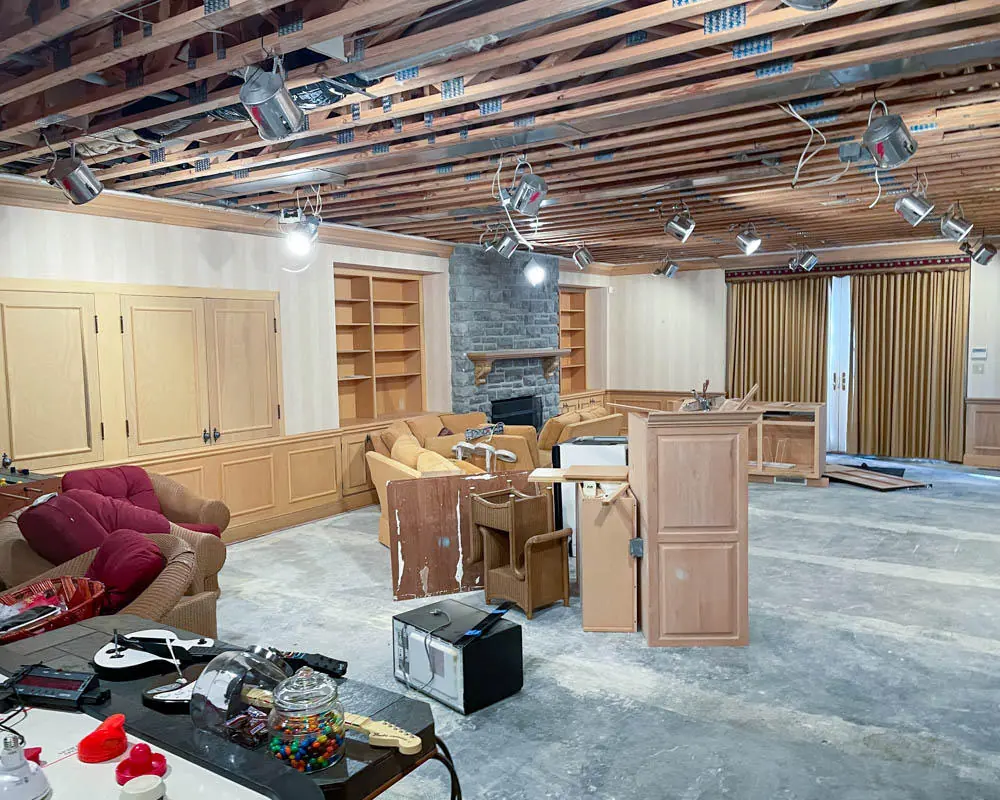
Truck-mounted and portable extractors pull standing water from the affected rooms quickly, because on a slab the water keeps spreading sideways into walls and cabinetry.
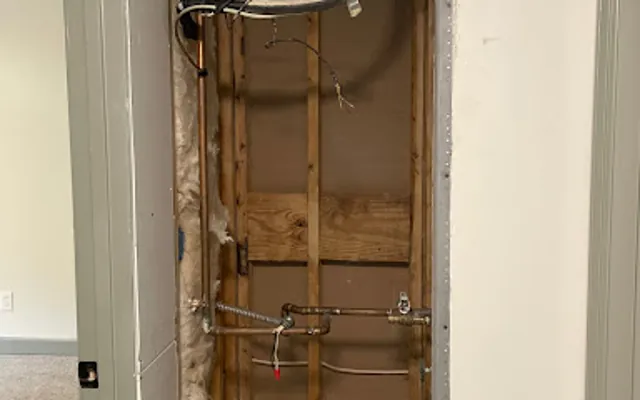
Wet drywall, insulation, and swollen baseboard are removed where the burst saturated them, opening wall cavities so trapped moisture around the pipe can be dried out.
Air movers and dehumidifiers run across the footprint while moisture meters track the framing and slab daily until every reading confirms the structure is fully dry.

While help is on the way, these first steps, done only where it is safe, limit the damage and protect the insurance claim.
Shut the supply off at the source, or close the home's main valve if the source is not obvious. Stopping the flow limits the damage more than anything else.
Switch off electricity to the affected area, but only if the breaker can be reached without standing in or touching the water.
Get a crew dispatched right away. The sooner extraction and drying begin, the more flooring, drywall, and belongings can be saved.
Take photos and a short video of the water and the affected rooms before anything is moved, so the insurance claim starts strong.
Burst pipe cleanup in Arlington commonly runs from about $2,000 to $8,000 or more, driven by how long the water ran before shutoff and how many rooms and wall cavities it reached. A quickly caught burst in one room sits low, while a line that failed while a family was away and flooded much of the home costs far more. Sudden pipe bursts are typically covered by homeowners insurance, and the crew documents moisture readings and photos for the carrier.
Crews reach Arlington, Tarrant County, and the surrounding Mid-Cities of North Texas fast, from Central Arlington, Dalworth, and East Arlington to Pantego, Grand Prairie, Mansfield, Hurst, and Euless. See the full list on the areas served across Arlington page.
See all areas servedEvery loss is photographed, measured, and logged from the first visit, so the paperwork holds up with the insurance carrier.
Technicians follow recognized IICRC drying standards and prove it with daily moisture readings on Arlington homes, not guesswork.
Emergency dispatch any hour of the day or night, with a real crew on the way across the Mid-Cities, not a callback in the morning.
A real crew dispatched any hour, not a callback in the morning.
Trained technicians following recognized IICRC drying standards.
Truck-mounted, portable, and submersible for any size loss.
The loss is documented and billed to the carrier directly.
Shut off the main water valve if it is safe to reach, then cut power to any flooded area at the breaker. After that, call for emergency cleanup. The faster extraction begins, the less the water spreads into walls, cabinets, and the slab beneath.
Hard freezes are uncommon but severe when they arrive, and local homes often route water lines through unheated attics and exterior walls. Corrosion in older pipes and clay-soil movement also cause bursts, so a failure can happen in any season.
Often yes. Water that runs behind drywall soaks insulation and framing that will not dry from the outside. Opening the cavity near the burst lets the crew dry the structure fully and prevents the mold and rot that follow trapped moisture.
Sudden, accidental pipe bursts are typically covered under homeowners policies, including the resulting water damage. The permanent pipe repair itself may not be. Technicians document the source, moisture readings, and photos to support the claim.
Arlington crews are on call 24 hours a day, local and fast, and can be on the way within the hour.
Call (817) 813-6321