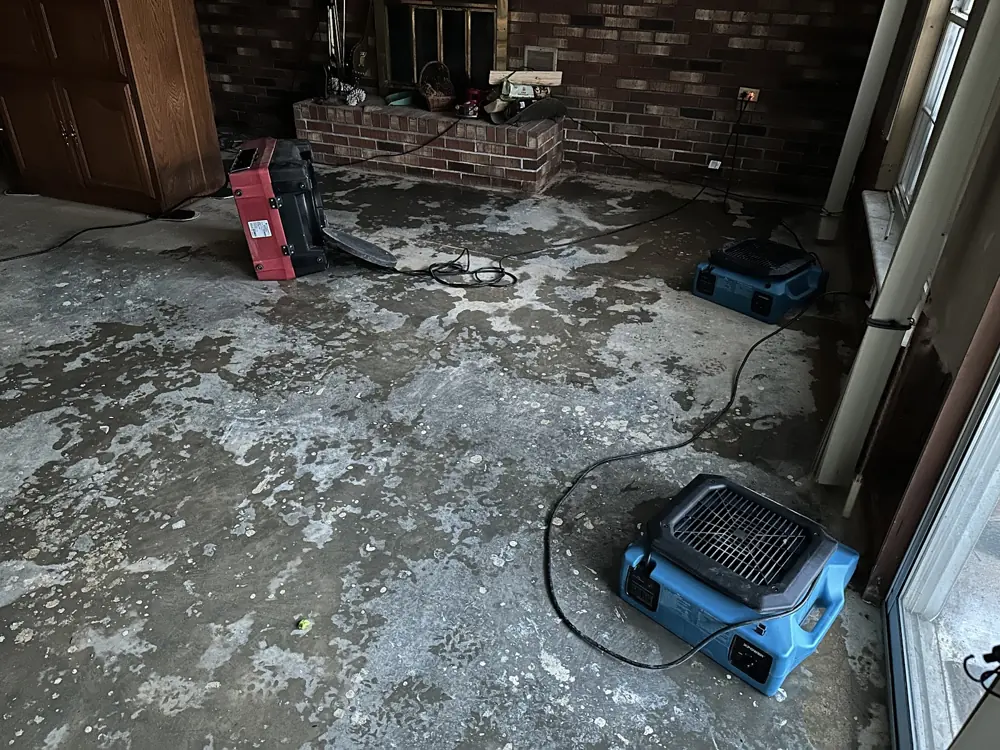
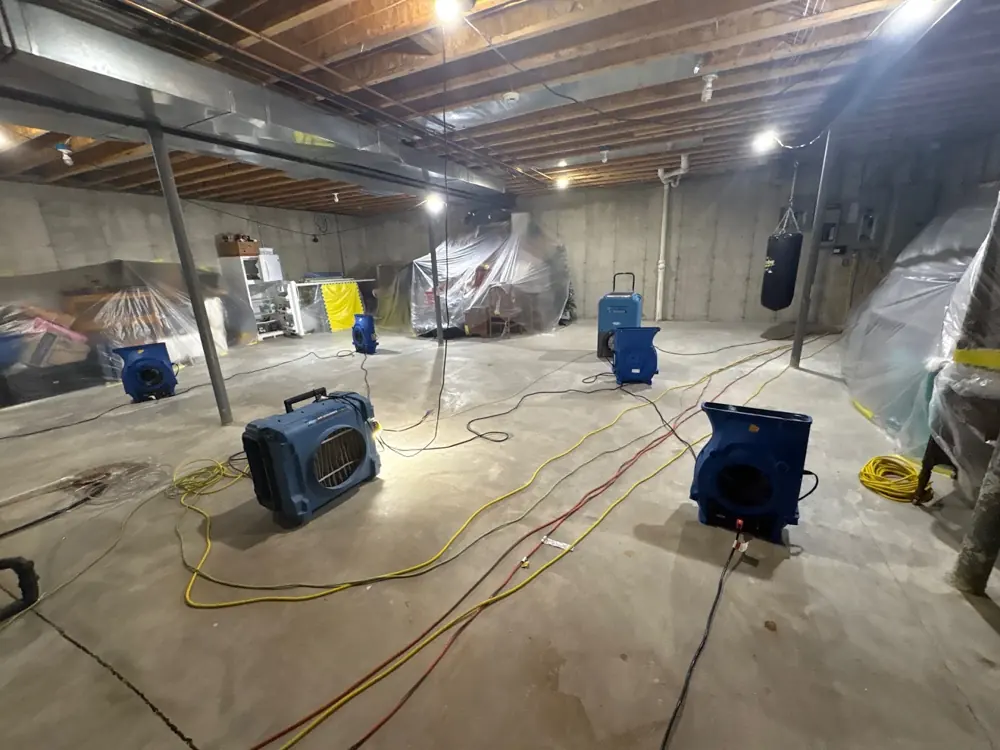
Garages flood from storm runoff, water heaters, and burst lines, and the water spreads under the wall into the house. Local crews extract it, dry the slab and framing, and verify moisture before it reaches finished rooms.

The crew checks for electrical hazards near garage outlets and equipment, then extracts standing water from the slab, clearing the lowest points and the door threshold first.
Because water wicks under the wall into the house, the crew inspects the adjoining room, opening baseboard or lower drywall where moisture has crossed into finished space.
Air movers and dehumidifiers dry the garage slab, framing, and any stored materials, along with the shared wall and the neighboring room where water traveled.
Moisture meters confirm the slab, walls, and adjacent room are dry, and the readings and photos are logged for an insurance claim if the loss is submitted.

While help is on the way, these first steps, done only where it is safe, limit the damage and protect the insurance claim.
Shut the supply off at the source, or close the home's main valve if the source is not obvious. Stopping the flow limits the damage more than anything else.
Switch off electricity to the affected area, but only if the breaker can be reached without standing in or touching the water.
Get a crew dispatched right away. The sooner extraction and drying begin, the more flooring, drywall, and belongings can be saved.
Take photos and a short video of the water and the affected rooms before anything is moved, so the insurance claim starts strong.
Garage water damage cleanup in Arlington usually runs from about $800 to $4,000. A garage-only event on bare slab sits at the low end, since garages rarely have carpet or finished walls low down. The cost climbs when water crosses the shared wall into a finished room, or when a failed water heater or washer soaked drywall and cabinetry. Sudden losses are commonly covered by homeowners insurance, and the crew documents moisture readings and photos for the carrier.
Crews reach Arlington, Tarrant County, and the surrounding Mid-Cities of North Texas fast, from Central Arlington, Dalworth, and East Arlington to Pantego, Grand Prairie, Mansfield, Hurst, and Euless. See the full list on the areas served across Arlington page.
See all areas servedEvery loss is photographed, measured, and logged from the first visit, so the paperwork holds up with the insurance carrier.
Technicians follow recognized IICRC drying standards and prove it with daily moisture readings on Arlington homes, not guesswork.
Emergency dispatch any hour of the day or night, with a real crew on the way across the Mid-Cities, not a callback in the morning.
A real crew dispatched any hour, not a callback in the morning.
Trained technicians following recognized IICRC drying standards.
Truck-mounted, portable, and submersible for any size loss.
The loss is documented and billed to the carrier directly.
Because garage water rarely stays in the garage. It wicks under the shared wall into the adjacent room, soaking baseboard, drywall, and the slab of finished space. Drying the garage and checking that shared wall keeps a garage flood from quietly becoming interior damage.
Usually the garage slab sits low and slopes toward the door, and yard or driveway grading channels runoff toward the house. Sealing the threshold and improving grading help, but during the strongest North Texas downpours some water can still push under the door.
Shut off the water supply to the tank if it is safe, then have the standing water extracted. The crew dries the garage slab and any finished space the water reached, and the failed tank is flagged for a qualified plumbing contractor to replace.
A sudden, accidental event like a burst line or tank failure is commonly covered, while gradual seepage or a maintenance issue may not be. Technicians document the source, moisture readings, and photos so the carrier has clear support for the claim.
Arlington crews are on call 24 hours a day, local and fast, and can be on the way within the hour.
Call (817) 813-6321