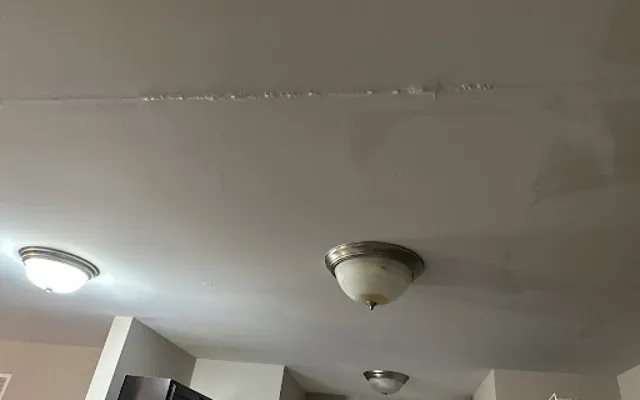
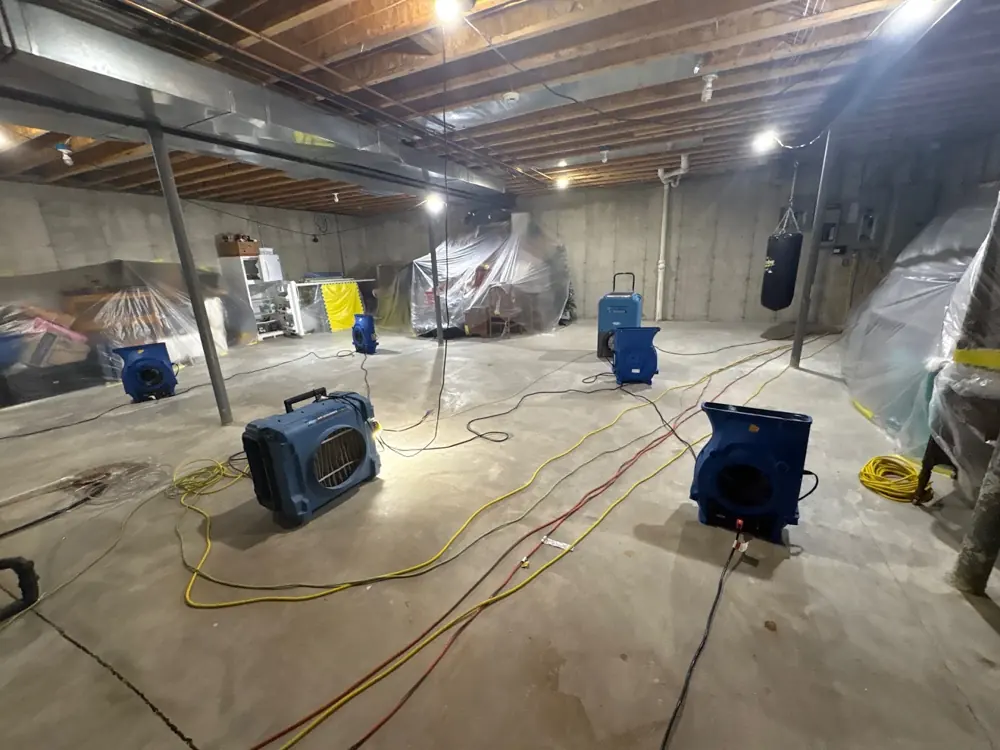
A brown ring or a sagging ceiling means water is already pooling above the drywall. Local crews trace the source, dry the cavity and framing, and verify moisture so the ceiling can be repaired without sealing in a problem.

Before any drying, a technician finds where the water is coming from, whether roof, HVAC, or an upstairs fixture, because a ceiling will keep getting wet until the source is stopped.
If the drywall is bulging with trapped water, the crew relieves it safely to prevent a collapse, then extracts standing water and removes sections too saturated to save.
Air movers and dehumidifiers dry the joists, insulation, and remaining drywall from above and below, reaching the hidden framing rather than only the painted surface.
Moisture meters verify the ceiling cavity is dry before repair, and the readings and photos are documented so an insurance claim has the support it needs.

While help is on the way, these first steps, done only where it is safe, limit the damage and protect the insurance claim.
Shut the supply off at the source, or close the home's main valve if the source is not obvious. Stopping the flow limits the damage more than anything else.
Switch off electricity to the affected area, but only if the breaker can be reached without standing in or touching the water.
Get a crew dispatched right away. The sooner extraction and drying begin, the more flooring, drywall, and belongings can be saved.
Take photos and a short video of the water and the affected rooms before anything is moved, so the insurance claim starts strong.
Ceiling water damage in Arlington generally costs between about $700 and $4,000 to clean and dry. A single stained area from a small leak sits at the low end, while a sagging ceiling that needed partial removal, insulation replacement, and framing drying costs more. The source repair, such as roofing or plumbing, is usually separate. Sudden leaks are commonly covered by homeowners insurance, and the crew documents moisture readings and photos for the carrier.
Crews reach Arlington, Tarrant County, and the surrounding Mid-Cities of North Texas fast, from Central Arlington, Dalworth, and East Arlington to Pantego, Grand Prairie, Mansfield, Hurst, and Euless. See the full list on the areas served across Arlington page.
See all areas servedEvery loss is photographed, measured, and logged from the first visit, so the paperwork holds up with the insurance carrier.
Technicians follow recognized IICRC drying standards and prove it with daily moisture readings on Arlington homes, not guesswork.
Emergency dispatch any hour of the day or night, with a real crew on the way across the Mid-Cities, not a callback in the morning.
A real crew dispatched any hour, not a callback in the morning.
Trained technicians following recognized IICRC drying standards.
Truck-mounted, portable, and submersible for any size loss.
The loss is documented and billed to the carrier directly.
Yes. Drywall holding trapped water can grow heavy enough to collapse without warning, which is a real hazard below. A crew relieves the water safely and supports the area, so it is best to keep people clear and call for help rather than probing it yourself.
Water follows the path of least resistance along joists and framing before it drips through drywall, so the visible ring often sits several feet from the actual source. That is why tracing the leak first, before drying, matters so much.
Painting hides the mark but not the moisture. If the cavity above is still damp, the stain returns and mold can grow. The framing and insulation need to be dried and verified with meters before any repair or repainting is done.
Sudden, accidental leaks from a storm, burst line, or overflow are commonly covered, while long-term seepage often is not. Technicians document the source, moisture readings, and photos so the carrier has clear evidence for the claim.
Arlington crews are on call 24 hours a day, local and fast, and can be on the way within the hour.
Call (817) 813-6321