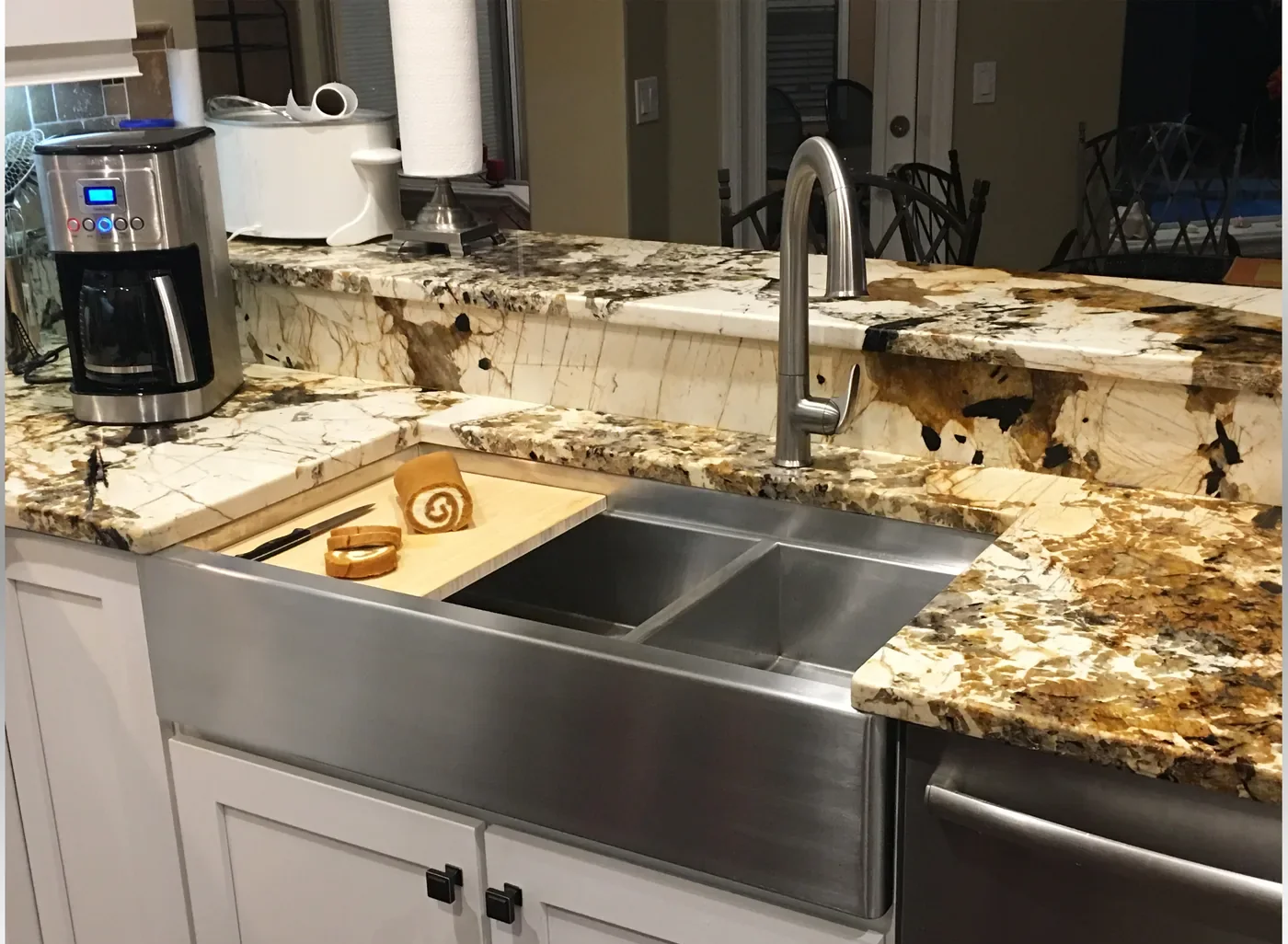
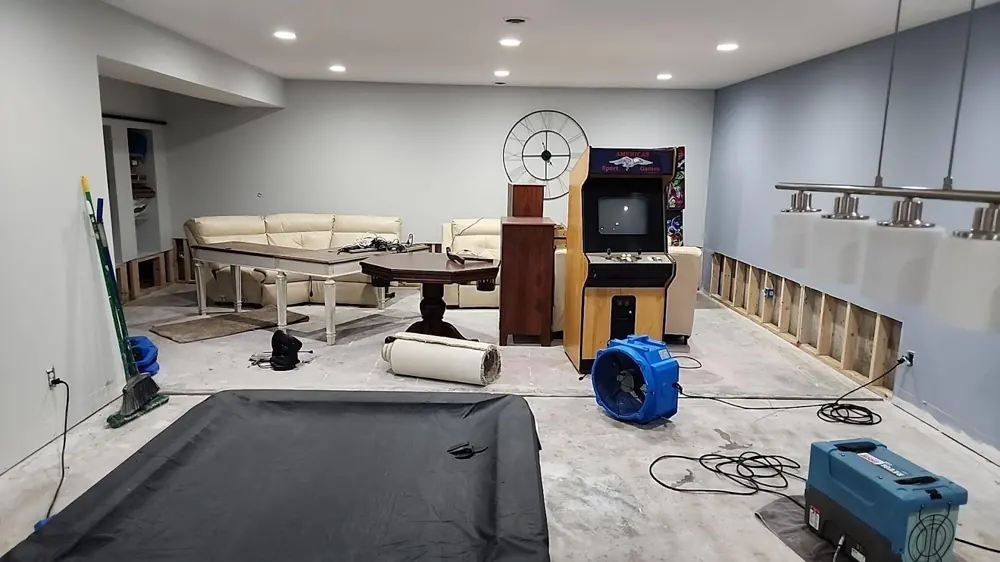
A kitchen sink that overflows sends water over the counter and into the cabinet below, soaking the base and subfloor. Local crews extract the water, dry the cabinet cavity, and verify moisture before the cabinetry and flooring warp.

The crew confirms the water is off, then extracts standing water from the floor and the sink base cabinet, clearing the pooled water before it spreads further across the slab.
Where the base and toe-kick are saturated, the crew opens the cabinet floor or lower panels so the trapped moisture under and behind the sink cabinet can actually dry.
Air movers and a dehumidifier are aimed into the cabinet, along the toe-kicks, and across the floor, drying the subfloor and framing rather than only the surface.
Moisture meters confirm the cabinet, subfloor, and walls are dry, and the readings and photos are logged in case the loss goes to an insurance claim.

While help is on the way, these first steps, done only where it is safe, limit the damage and protect the insurance claim.
Shut the supply off at the source, or close the home's main valve if the source is not obvious. Stopping the flow limits the damage more than anything else.
Switch off electricity to the affected area, but only if the breaker can be reached without standing in or touching the water.
Get a crew dispatched right away. The sooner extraction and drying begin, the more flooring, drywall, and belongings can be saved.
Take photos and a short video of the water and the affected rooms before anything is moved, so the insurance claim starts strong.
Kitchen sink overflow cleanup in Arlington usually costs between about $600 and $3,000. A quick catch that only wet the floor sits at the low end, while water that soaked the sink base cabinet, neighboring cabinets, and subfloor runs higher because more materials must be dried or replaced. Swollen cabinets or lifted flooring add replacement cost. Sudden overflows are commonly covered by homeowners insurance, and the crew documents moisture readings and photos for the carrier.
Crews reach Arlington, Tarrant County, and the surrounding Mid-Cities of North Texas fast, from Central Arlington, Dalworth, and East Arlington to Pantego, Grand Prairie, Mansfield, Hurst, and Euless. See the full list on the areas served across Arlington page.
See all areas servedEvery loss is photographed, measured, and logged from the first visit, so the paperwork holds up with the insurance carrier.
Technicians follow recognized IICRC drying standards and prove it with daily moisture readings on Arlington homes, not guesswork.
Emergency dispatch any hour of the day or night, with a real crew on the way across the Mid-Cities, not a callback in the morning.
A real crew dispatched any hour, not a callback in the morning.
Trained technicians following recognized IICRC drying standards.
Truck-mounted, portable, and submersible for any size loss.
The loss is documented and billed to the carrier directly.
Often yes. A dry surface can sit over a soaked cabinet base and subfloor that will not dry on their own in Arlington's humidity. Meter checks show whether the hidden materials are truly dry, and drying the cavity prevents the swelling, warping, and mold that follow trapped moisture.
Not always. Caught early, cabinets often dry and survive once the crew opens the base and toe-kick. Particleboard cabinet bases are the most fragile because they swell when saturated, so fast drying is what decides whether they are saved or need replacement.
Because the water pools inside the closed sink cabinet, where surface air never reaches it. Opening the cabinet floor and toe-kick lets air movers dry the trapped moisture in the base and subfloor, which is exactly where an overflow does its lasting damage.
A sudden, accidental overflow is commonly covered under homeowners policies, while a slow, long-neglected leak may not be. Technicians document the source, moisture readings, and photos so the carrier has clear support when the claim is submitted.
Arlington crews are on call 24 hours a day, local and fast, and can be on the way within the hour.
Call (817) 813-6321