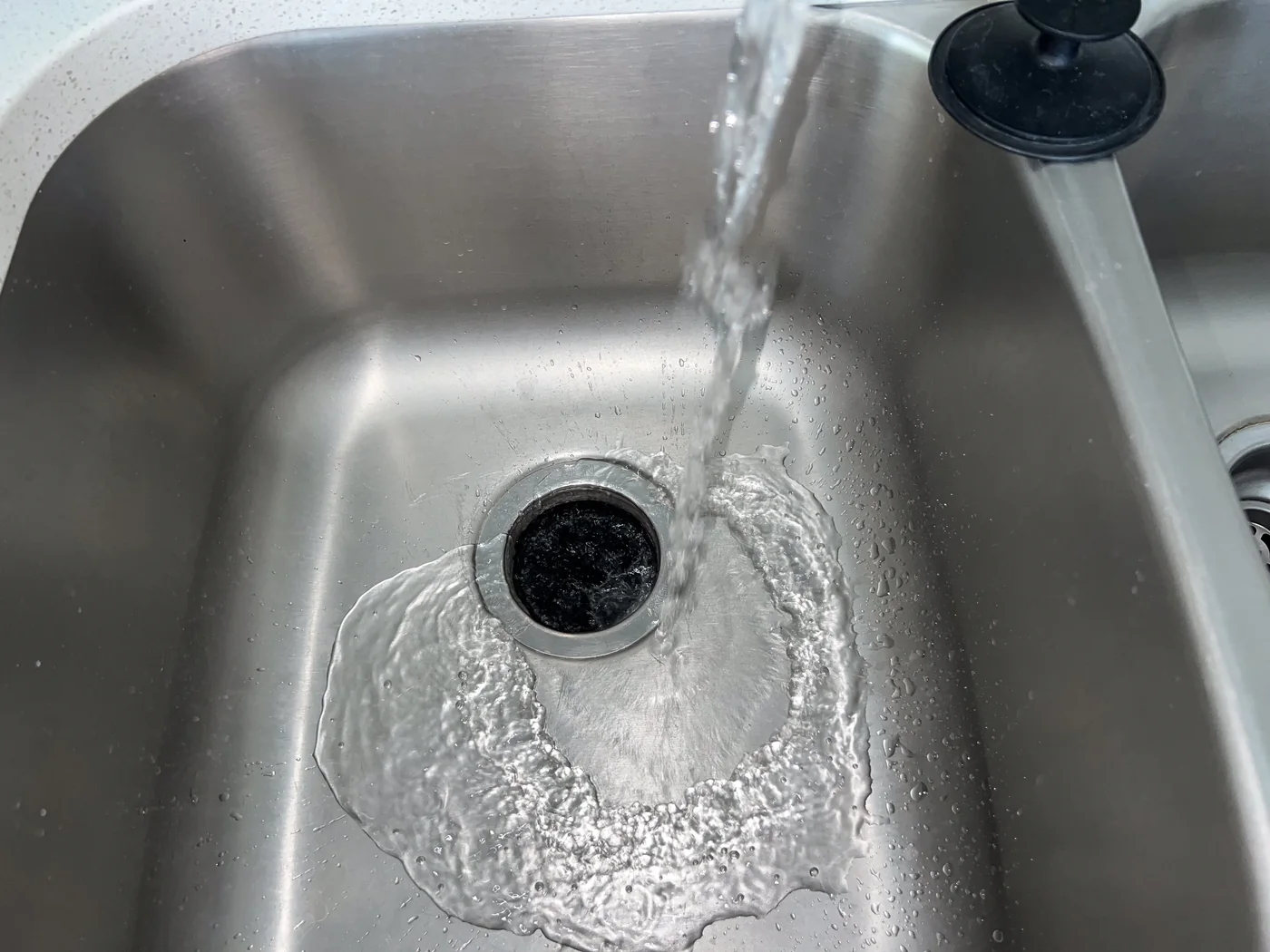
A dripping faucet or a weeping fixture connection loses water slowly, so the damage builds behind cabinets and inside walls before anyone notices. Local crews locate the moisture, dry the cavity, and verify readings before the problem grows.

Using moisture meters and where needed a thermal camera, a technician maps how far the slow leak has traveled through cabinets, walls, and subfloor before any drying starts.
With the fixture supply shut off, the crew opens toe-kicks, cabinet backs, or a small wall section as needed to reach the trapped moisture the leak left behind.
Air movers and a dehumidifier are focused on the wet cabinet, wall, or subfloor, drying the concealed framing rather than only the visible surface around the fixture.
Moisture meters confirm the materials are dry before anything is closed up, and the readings and photos are logged for a plumbing repair or an insurance claim.

While help is on the way, these first steps, done only where it is safe, limit the damage and protect the insurance claim.
Shut the supply off at the source, or close the home's main valve if the source is not obvious. Stopping the flow limits the damage more than anything else.
Switch off electricity to the affected area, but only if the breaker can be reached without standing in or touching the water.
Get a crew dispatched right away. The sooner extraction and drying begin, the more flooring, drywall, and belongings can be saved.
Take photos and a short video of the water and the affected rooms before anything is moved, so the insurance claim starts strong.
Faucet and fixture leak cleanup in Arlington usually costs between about $500 and $2,800. A recently started drip that only dampened a cabinet base sits at the low end, while a long-running leak that soaked the subfloor, cabinets, and wall framing costs more because more material must be opened and dried. If cabinets or drywall are beyond drying, replacement adds to it. Sudden leaks are often covered by homeowners insurance, and the crew documents readings and photos for the carrier.
Crews reach Arlington, Tarrant County, and the surrounding Mid-Cities of North Texas fast, from Central Arlington, Dalworth, and East Arlington to Pantego, Grand Prairie, Mansfield, Hurst, and Euless. See the full list on the areas served across Arlington page.
See all areas servedEvery loss is photographed, measured, and logged from the first visit, so the paperwork holds up with the insurance carrier.
Technicians follow recognized IICRC drying standards and prove it with daily moisture readings on Arlington homes, not guesswork.
Emergency dispatch any hour of the day or night, with a real crew on the way across the Mid-Cities, not a callback in the morning.
A real crew dispatched any hour, not a callback in the morning.
Trained technicians following recognized IICRC drying standards.
Truck-mounted, portable, and submersible for any size loss.
The loss is documented and billed to the carrier directly.
If the drip escapes into a cabinet, wall, or subfloor, yes. Slow leaks do the most hidden damage because they run for weeks unnoticed. By the time a stain or smell appears, framing and cabinets are often soaked, and drying the cavity prevents rot and mold.
Technicians use moisture meters and, when needed, a thermal camera to map where the water has spread behind surfaces. That shows exactly which cabinet, wall, or subfloor section is wet, so only the affected area is opened and dried rather than guessing.
The focus is on drying and restoring the water damage. The failed fixture or valve is flagged for a qualified plumbing contractor to replace, since stopping the source and drying the structure are two separate jobs that both need to be done.
It can. The humidity here keeps concealed materials damp, and a leak that runs for weeks behind a cabinet or wall is a common start for mold. Finding the moisture early and drying it fully with verified readings is the best way to prevent it.
Arlington crews are on call 24 hours a day, local and fast, and can be on the way within the hour.
Call (817) 813-6321