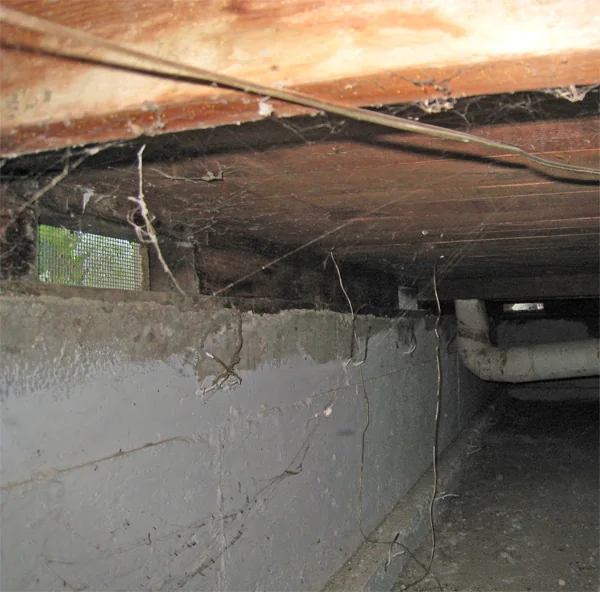
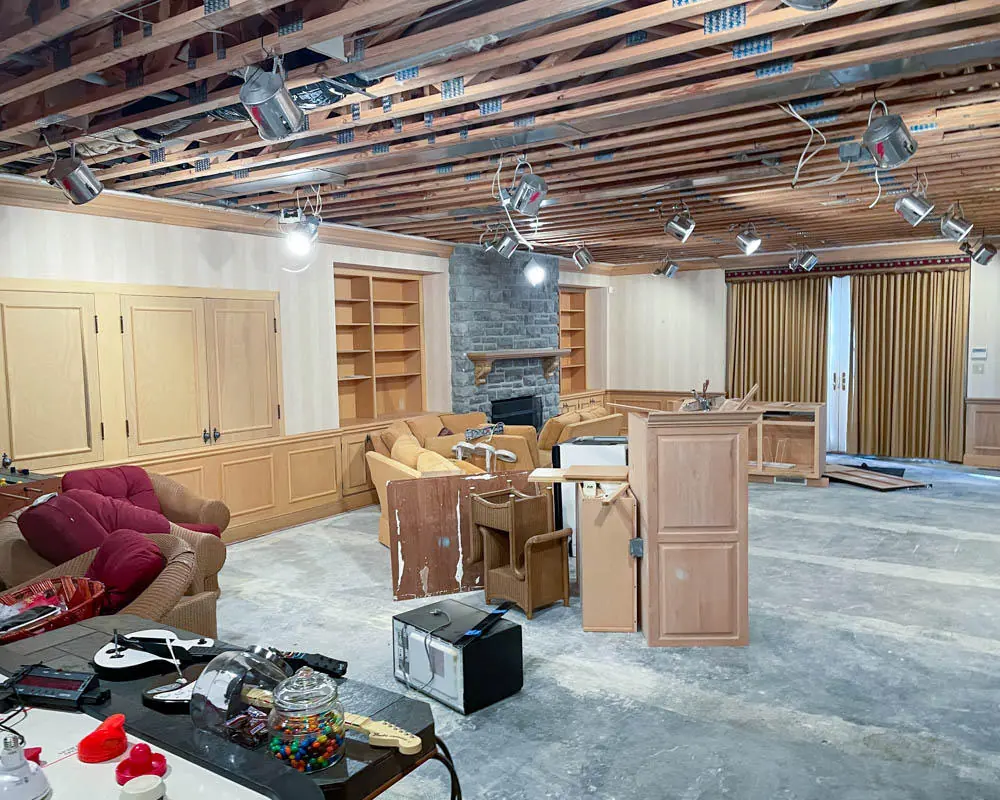
Most Arlington homes sit on slab, but older pier-and-beam houses have crawlspaces that collect water and stay damp. Local crews pump out standing water, dry the space, and verify the framing so joists and subfloor stay sound.

A technician enters the crawlspace to gauge how much water is standing, checks the joists and subfloor for saturation, and looks for the source before pumping begins.
Submersible pumps and extractors clear standing water from the crawlspace, and saturated debris or ruined vapor barrier is removed so the ground and framing can dry.
Air movers and a dehumidifier are staged in the crawlspace to pull moisture out of the joists, subfloor, and soil surface, drying the enclosed space to a stable level.
Moisture readings confirm the framing is dry, a fresh vapor barrier can be laid where needed, and the findings are documented for repair planning or an insurance claim.

While help is on the way, these first steps, done only where it is safe, limit the damage and protect the insurance claim.
Shut the supply off at the source, or close the home's main valve if the source is not obvious. Stopping the flow limits the damage more than anything else.
Switch off electricity to the affected area, but only if the breaker can be reached without standing in or touching the water.
Get a crew dispatched right away. The sooner extraction and drying begin, the more flooring, drywall, and belongings can be saved.
Take photos and a short video of the water and the affected rooms before anything is moved, so the insurance claim starts strong.
Crawlspace water removal in Arlington usually runs from about $1,000 to $4,500. The cost depends on how much water is standing, how tight the access is, whether joists or subfloor need extended drying, and if a new vapor barrier is installed. A quick pump-out costs less than a saturated crawlspace that has sat damp and needs structural drying. Sudden losses are often covered by homeowners insurance, and the crew documents moisture readings and photos for the carrier.
Crews reach Arlington, Tarrant County, and the surrounding Mid-Cities of North Texas fast, from Central Arlington, Dalworth, and East Arlington to Pantego, Grand Prairie, Mansfield, Hurst, and Euless. See the full list on the areas served across Arlington page.
See all areas servedEvery loss is photographed, measured, and logged from the first visit, so the paperwork holds up with the insurance carrier.
Technicians follow recognized IICRC drying standards and prove it with daily moisture readings on Arlington homes, not guesswork.
Emergency dispatch any hour of the day or night, with a real crew on the way across the Mid-Cities, not a callback in the morning.
A real crew dispatched any hour, not a callback in the morning.
Trained technicians following recognized IICRC drying standards.
Truck-mounted, portable, and submersible for any size loss.
The loss is documented and billed to the carrier directly.
Most do not. Newer Arlington homes are slab-on-grade with no crawlspace. Older pre-war and mid-century pier-and-beam houses, common in central Arlington and Dalworth, are the ones that have a crawlspace where water can collect out of sight.
A wet crawlspace stays humid on the clay soil here and slowly rots joists, warps the subfloor, and grows mold that drifts into the living space. Pumping the water and drying the framing protects the structure and the air quality above and keeps repairs smaller.
Signs include musty odors indoors, sagging or springy floors, condensation on ductwork, and higher humidity in the lowest rooms. Because the space is hidden, a technician usually confirms it by entering the crawlspace and checking the framing with a meter.
Often yes. A vapor barrier that has been submerged or torn no longer keeps ground moisture out, so laying a fresh one after drying helps the crawlspace stay dry. Better grading around the home reduces how much water reaches it in the first place.
Arlington crews are on call 24 hours a day, local and fast, and can be on the way within the hour.
Call (817) 813-6321