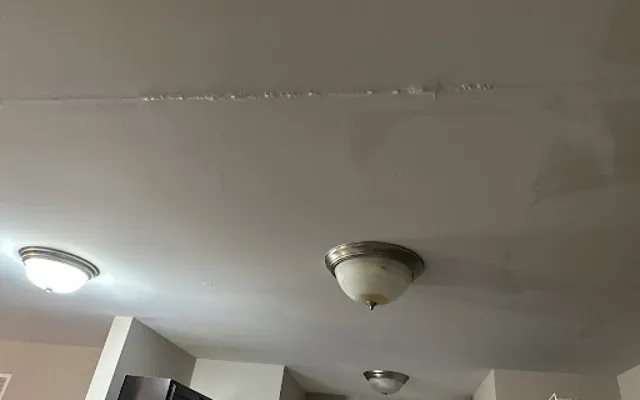
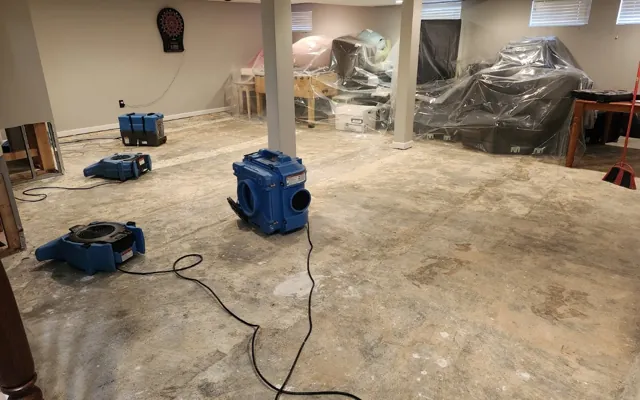
A bulging ceiling in Richland Hills, TX, needs fast action to prevent collapse and mold. Local crews respond quickly to stop the leak, contain the damage, and dry the framing following IICRC-standard methods before repair can begin.

Technicians first find where the water is coming from, whether it's a slab leak, a failed water heater, or a supply line. Stopping the flow is critical; a ceiling in Richland Hills will keep getting wet until the source is fixed.
The crew safely relieves bulging, waterlogged drywall to prevent a sudden ceiling collapse. They then extract all standing water and remove any sections of ceiling or insulation too saturated to be saved, clearing the way for proper drying.
Air movers and dehumidifiers are placed to dry the wooden joists and remaining materials from both above and below. This targets the hidden framing inside the cavity, not just the surface, preventing future mold and rot.

Ceiling water damage in Richland Hills generally costs between about $700 and $4,000 to clean and dry. A single stained area from a small leak sits at the low end, while a sagging ceiling that needed partial removal, insulation replacement, and framing drying costs more. The source repair, such as roofing or plumbing, is usually separate. Sudden leaks are commonly covered by homeowners insurance, and the crew documents moisture readings and photos for the carrier.
Ceiling leaks in Richland Hills often start below the floor. Many of the area's 1960s ranch homes sit on concrete slabs where aging copper lines can corrode. When a pipe fails or a water heater leaks, water travels up through walls and seeps into ceiling cavities, creating stains and dangerous sags before it's even noticed. Original plumbing in older slab foundations, combined with North Texas clay soil that shifts and stresses pipes, makes Richland Hills prone to leaks. Hard winter freezes and spring hail storms can also cause sudden pipe bursts or roof damage that leads to ceiling water. From Richland Hills, crews also cover nearby Forest Hill, Irving, North Richland Hills, Bedford, Haltom City, Colleyville. See every neighborhood and town on the full service area page.
See all areas servedEvery loss is photographed, measured, and logged from the first visit, so the paperwork holds up with the insurance carrier.
Technicians follow recognized IICRC drying standards and prove it with daily moisture readings on Richland Hills homes, not guesswork.
Emergency dispatch any hour of the day or night, with a real crew on the way across the Mid-Cities, not a callback in the morning.
A real crew dispatched any hour, not a callback in the morning.
Trained technicians following recognized IICRC drying standards.
Truck-mounted, portable, and submersible for any size loss.
The loss is documented and billed to the carrier directly.
Sudden, accidental leaks, like those from a burst pipe or a storm damaged roof, are typically covered by homeowners insurance in TX. The restoration crew provides the detailed moisture logs and photos needed to support the claim for the drying work.
Drying a ceiling cavity in Richland Hills usually takes 2 to 4 days. The timeframe depends on the leak's source, how long the water spread, and the home's humidity. Technicians use meters to verify the wood framing and insulation are dry before ending the process.
Crews are on call 24 hours a day and can be on the way to Richland Hills within the hour.
Call (817) 813-6321